








![1759027228f07b94[1]](https://txmixing.com/wp-content/uploads/2026/02/1759027228f07b941.jpg)
Overview: Scientific Methods for Concrete Mixing Equipment Selection
Concrete mixing equipment selection is the foundation of any successful project in the modern concrete production industry. The correct matching of mixing equipment and production facilities directly impacts project efficiency and product quality. Suitable equipment combinations can significantly enhance production capacity while effectively controlling operational costs. As professional equipment suppliers, we are committed to providing customers with precise equipment configuration solutions. This article elaborates on current mainstream mixer types in the market and their matching methods, offering a systematic guide for industry users.
Before delving into specific equipment analysis, it is essential to first understand the basic composition of concrete production systems and the interrelationships between various components.
Detailed Description of Equipment Categories
1. Forced Mixer Series
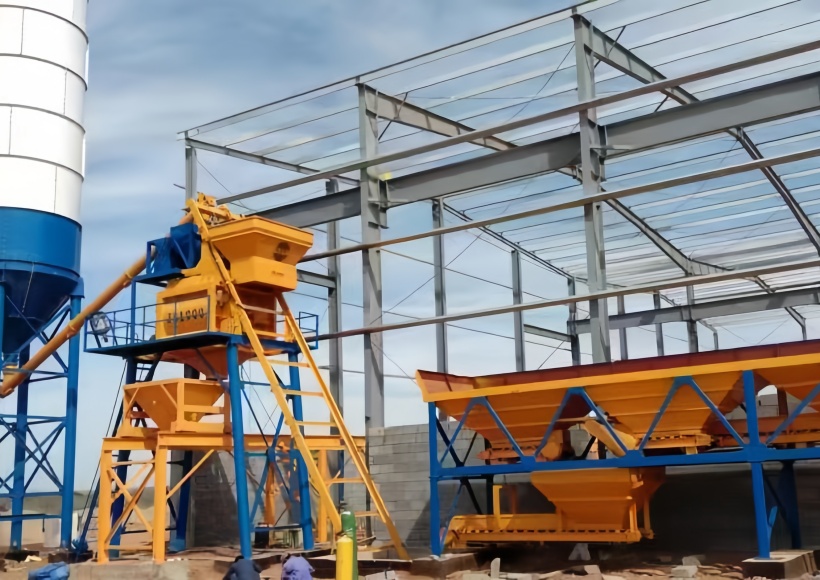
Double-Shaft Forced Mixer
– Specification range: JS500-750-1000-1500-2000-3000-JS4000 series
– Operating characteristics: Utilizes dual-shaft synchronous mixing technology, high mixing intensity, uniform material distribution
– Application areas: Large-scale commercial concrete production, critical infrastructure projects
– Production capacity: 25 to 240 cubic meters per hour
Single-Shaft Forced Mixing Equipment
– Main specifications: JDC350, JDC500
– Structural advantages: Compact design, small footprint
– Production capacity: 18 to 30 cubic meters per hour
Drum-Type Mixing Equipment
– Significant advantages: Simple operation, low maintenance costs
– Applicable scenarios: Small-scale construction projects, rural development projects
Transitioning from forced mixing equipment to gravity mixing equipment categories, we can observe another mixing technology system suitable for different production needs.
2. Gravity Mixing Equipment Series
Hoisting-Type Mixing Equipment
– Model series: JZC250 to JZC1000
– Mobility characteristics: Convenient transportation, relatively low initial investment
– Production capacity: 12 to 25 cubic meters per hour
– Application occasions: Temporary projects, small-scale concrete precast component production
Reverse Discharge Mixing Equipment
– Operating characteristics: Forward rotation completes mixing, reverse rotation achieves discharge
– Scope of application: Small-scale precast component manufacturing workshops
Beyond conventional application scenarios, special engineering projects impose higher requirements on mixing technology, driving the development of professional mixing solutions.
3. Specialized Mixing Solutions
Planetary Mixing System
– Technical advantages: Multi-directional forced mixing, excellent mixing uniformity
– Professional applications: High-strength concrete, special formulation concrete production
Continuous Mixing System
– Production characteristics: Uninterrupted operation mode, outstanding overall efficiency
– Applicable projects: Road infrastructure construction projects
After selecting appropriate mixing hosts, integrating them into complete production systems becomes a critical consideration. Production site configuration solutions directly determine the operational efficiency of entire production lines.
Production Site Configuration Solutions
1. Classification by Layout Structure
Commercial Concrete Production Site Series
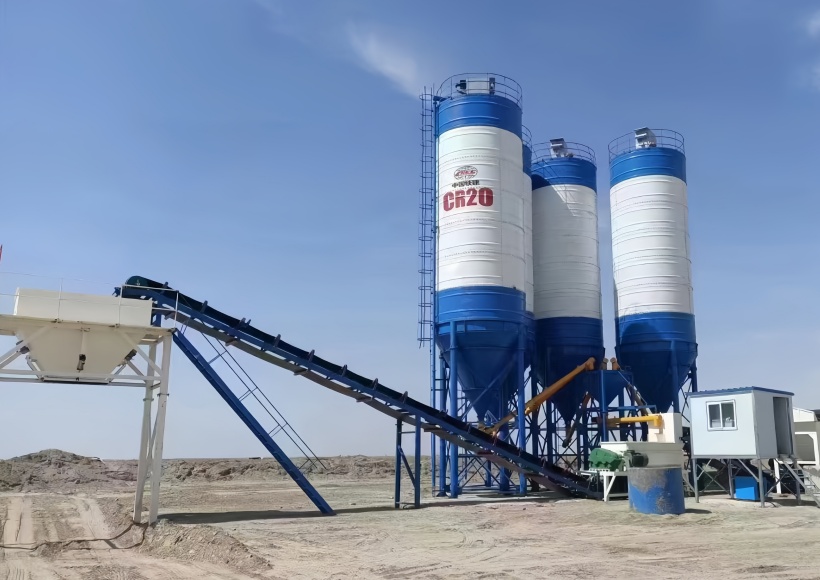
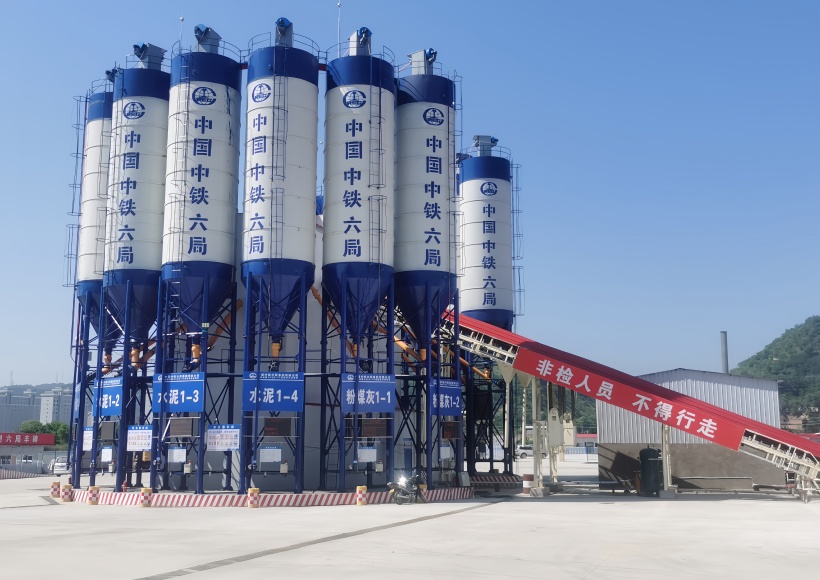
– Model range: HZS25 to HZS240 full series
– Design philosophy: Modular structure, rapid installation
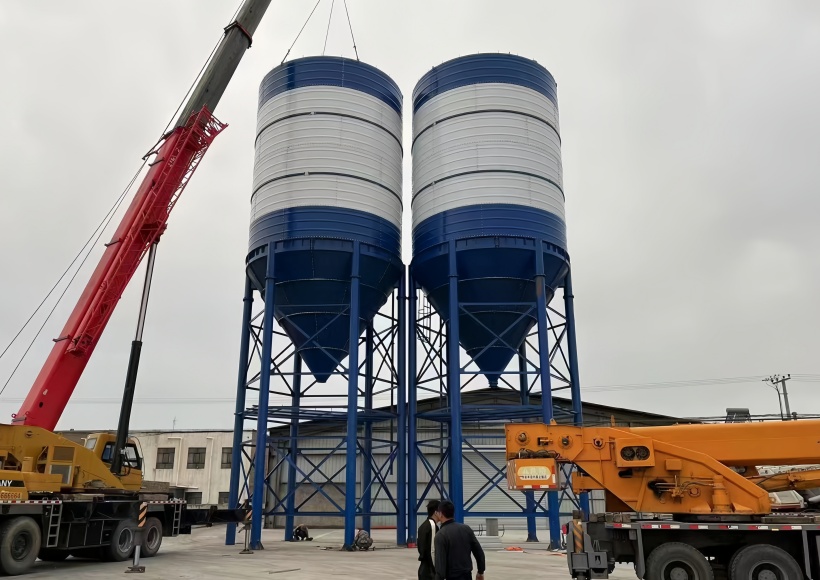
– Standard configuration: Forced mixing host + automatic batching system + intelligent control center + powder material storage device
Mobile Production Site Series
– Representative models: YHZS25 to YHZS120
– Core advantages: High flexibility, rapid relocation
– Applicable environments: Projects with tight schedules and dispersed work locations
Simplified Production Equipment
– Configuration features: Low initial investment, short construction period
– Basic components: Small and medium-sized mixers + basic metering equipment
Structural layout determines the physical form of equipment, while control methods define the intelligence level of systems. Next, we will understand how different control levels affect production management efficiency.
2. Classification by Control Level
Fully Automated Production Workstation
– Intelligence level: Program-controlled, high production precision
– Technical configuration: Programmable control system + automatic metering system
Semi-Automated Production Workstation
– Control characteristics: Human-machine collaborative operation, high flexibility
– System composition: Semi-automatic control + manual auxiliary operation
Manually Controlled Production Site
– Applicable targets: Small-scale projects with limited budgets and simple process requirements
After understanding basic equipment and site types, how do you make the right concrete mixing equipment selection? Practical matching solutions in actual applications can provide valuable references.
Equipment Matching Practical Solutions
Solution A: Small and Medium-Sized Project Configuration
– Mixing Host Selection: JS500/JDC500
– Matching Production Site: HZS25/HZS35
– Solution Advantages: Reasonable investment return, meets basic requirements
– Typical Applications: Regional construction projects, small-scale commercial concrete production
Solution B: Standard Production Configuration
– Mixing Host Selection: JS1000/JS1500
– Matching Production Site: HZS60/HZS90
– Solution Advantages: High comprehensive cost-effectiveness, widespread market application
– Typical Applications: Medium-scale commercial concrete production, urban construction development projects
Solution C: Large-Scale Project Configuration
– Mixing Host Selection: JS2000/JS3000
– Matching Production Site: HZS120/HZS180
– Solution Advantages: Powerful production capacity, advanced automation level
– Typical Applications: Major infrastructure projects, transportation construction projects
Solution D: Special Project Configuration
– Mixing Host Selection: Planetary professional mixer
– Matching Production Site: Customized integrated system
– Solution Advantages: Meets special proportion requirements, precise quality control
– Typical Applications: Special structure engineering, high-grade concrete production
Perfect equipment combinations require professional technical support. Suppliers’ technical capabilities and service capacities are equally important factors in ensuring project success.
Professional Technical Service Support
1. Technical Support System
– Independently developed mixing technology ensures uniform material distribution
– Intelligent control platform optimizes operational processes
– Energy-saving system design reduces long-term operating costs
2. Service Support Network
– Provides free site layout planning services
– Complete after-sales technical support system
– Comprehensive spare parts supply guarantee mechanism
3. Customization Service Capability
– Designs specialized solutions according to project characteristics
– Complex site adaptability modification services
– Control system personalized development capability
After mastering equipment and service information, how to avoid common pitfalls in actual selection? The following decision-making points may provide clear guidance.
Key Points for Selection Decision-Making
1. Important Considerations
– Project scale and total concrete demand
– Concrete type and technical specification requirements
– Installation site conditions and environmental protection standards
– Investment budget and long-term operating costs
– Future production capacity expansion possibilities
2. Common Selection Mistakes
– Avoid mismatching equipment capacity with actual needs
– Emphasize early planning of environmental protection configurations
– Comprehensively evaluate equipment reliability and service support
– Pay attention to long-term accuracy of metering systems
3. Equipment Maintenance Priorities
– Regularly check mixing component wear conditions
– Maintain normal operation of lubrication systems
– Periodically calibrate metering equipment
– Timely cleaning to prevent concrete solidification
Considering all the above factors, we can derive clear concrete mixing equipment selection paths. Final decisions should be based on systematic analysis rather than simple comparisons of single indicators.
Summary and Recommendations
Scientific concrete mixing equipment selection forms the crucial foundation for successful engineering project implementation. Tongxin Machinery, based on rich industry experience and technical accumulation, provides targeted equipment configuration advice for customers. Regardless of your project scale, we can offer professional technical support and reliable product guarantees.