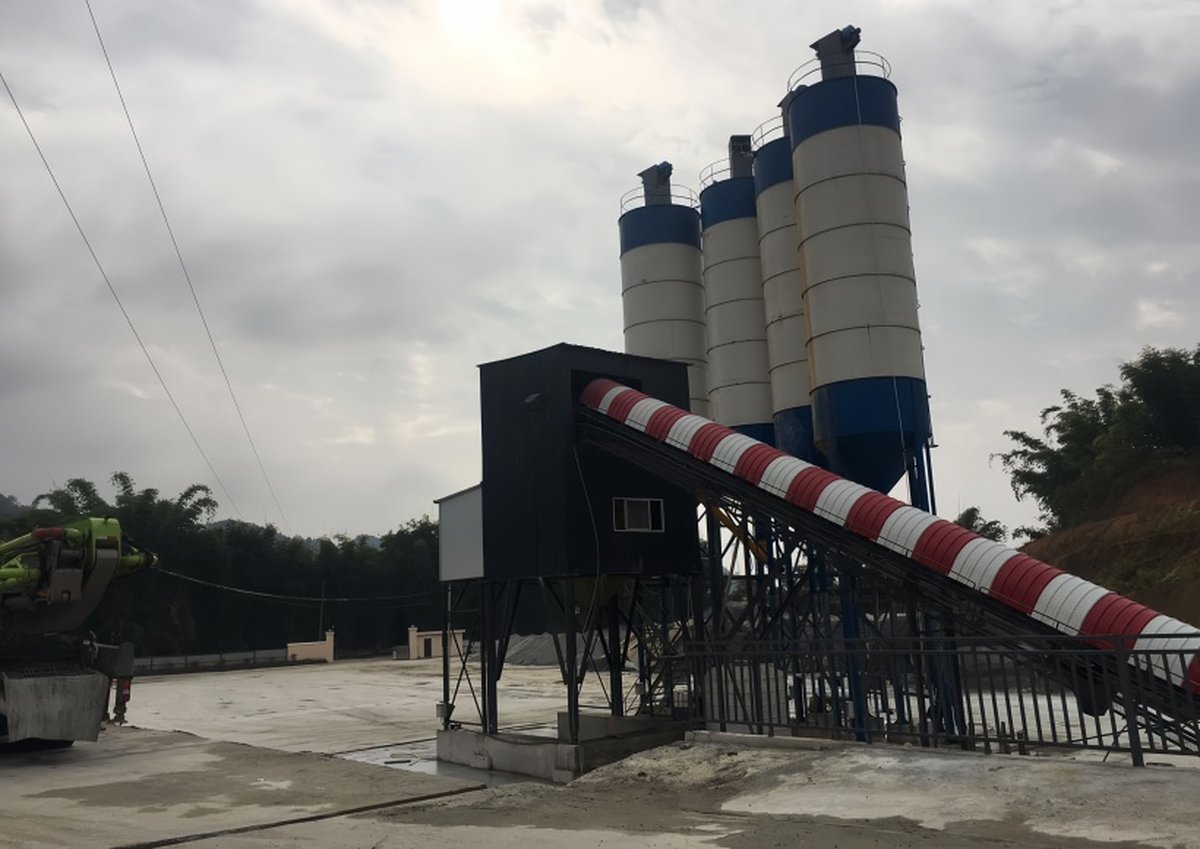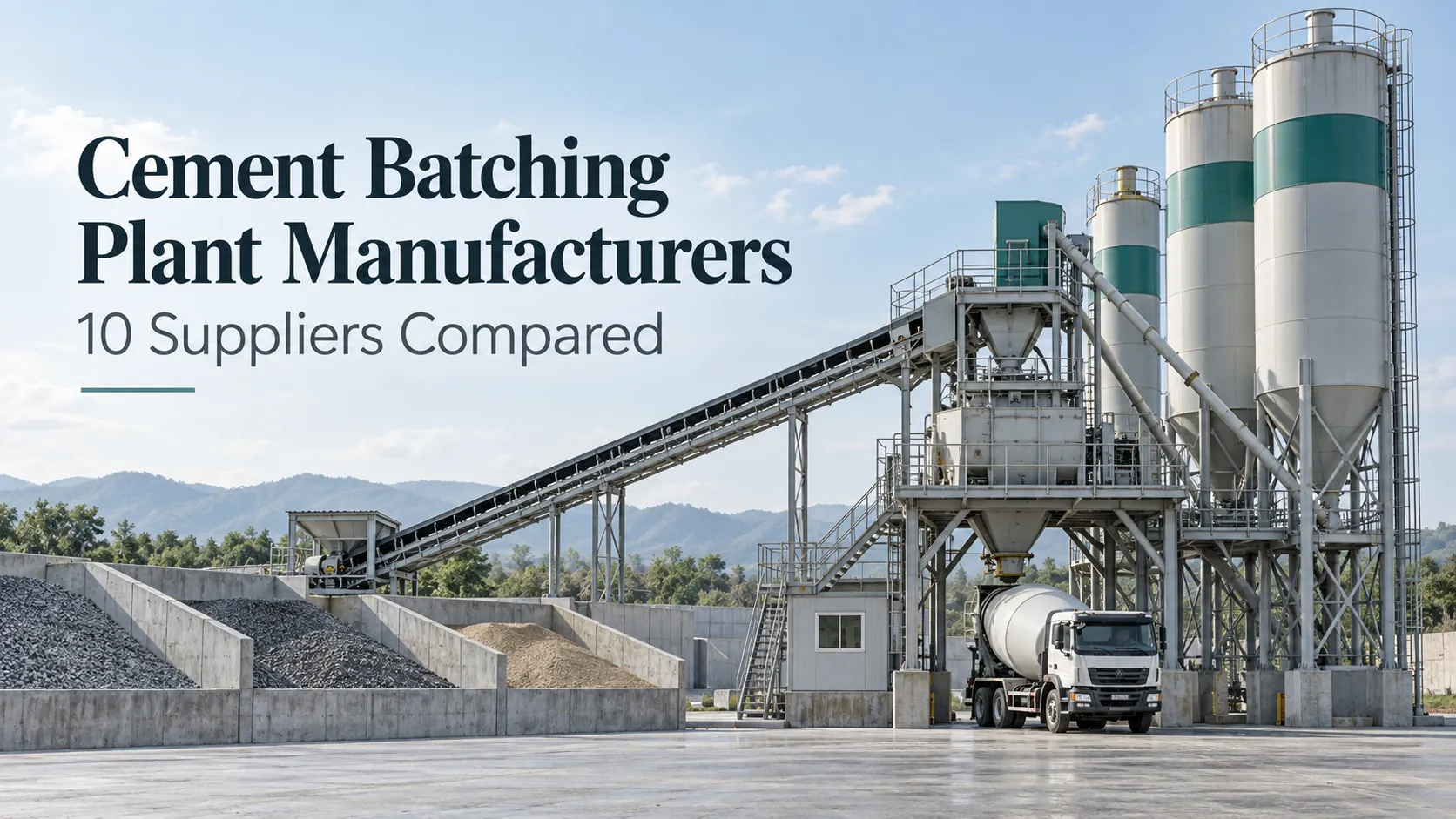



Ask ten plant operators how much concrete their HZS60 actually produces in a shift and you will hear answers between 40 and 50 m³/h — not the 60 m³/h printed in the brochure. That gap between the rated figure and the real-world HZS60 concrete batching capacity is what this article is about: what the machine is rated for, what it really delivers on site, and what that difference means for your production planning and your investment.
We have shipped HZS60 stations to mid-sized projects and ready-mix yards for years, and we keep field notes on every one of them. Below we walk through the core specifications, the reasons actual output trails the theoretical figure, daily and annual production numbers, the factors that move output up or down, and a realistic look at the return on investment.
HZS60 Concrete Batching Plant: Key Numbers at a Glance
- Theoretical capacity: 60 m³/h with the JS1000 mixer on a 60-second cycle
- Actual output: 40–50 m³/h on a real site — 70–80% of the rated figure
- Daily output: 400–500 m³ over an 8–10 hour working day
- Annual output: 120,000–150,000 m³ at 300 working days
- Best fit: medium-sized projects and ready-mix yards with steady batch demand
What Is the HZS60 Concrete Batching Capacity?
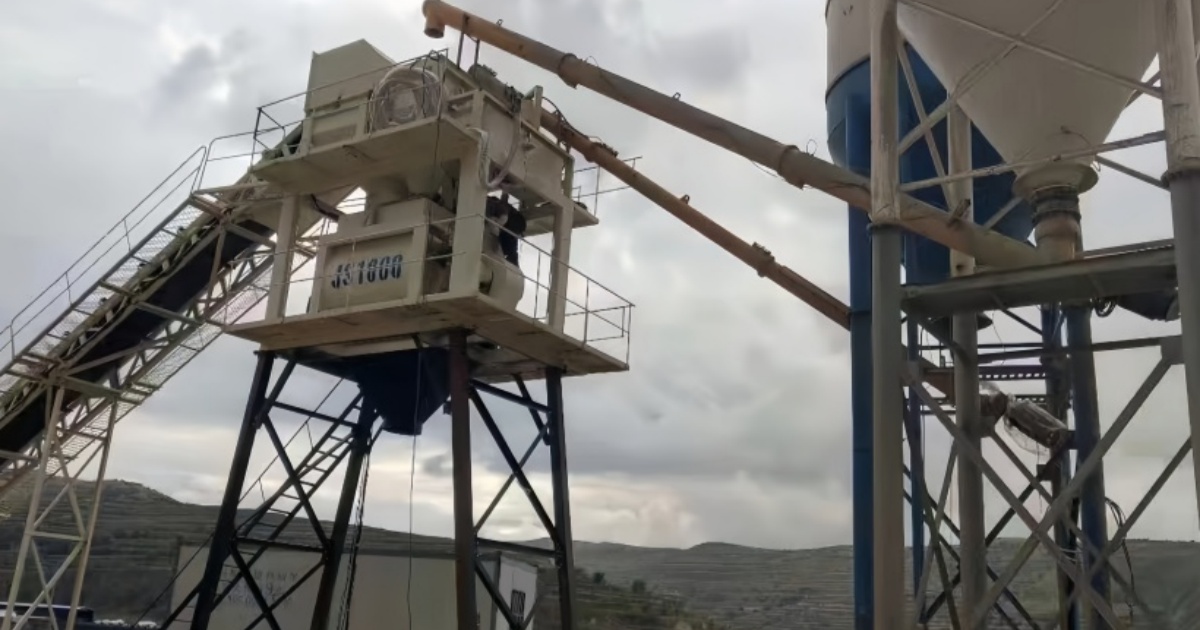
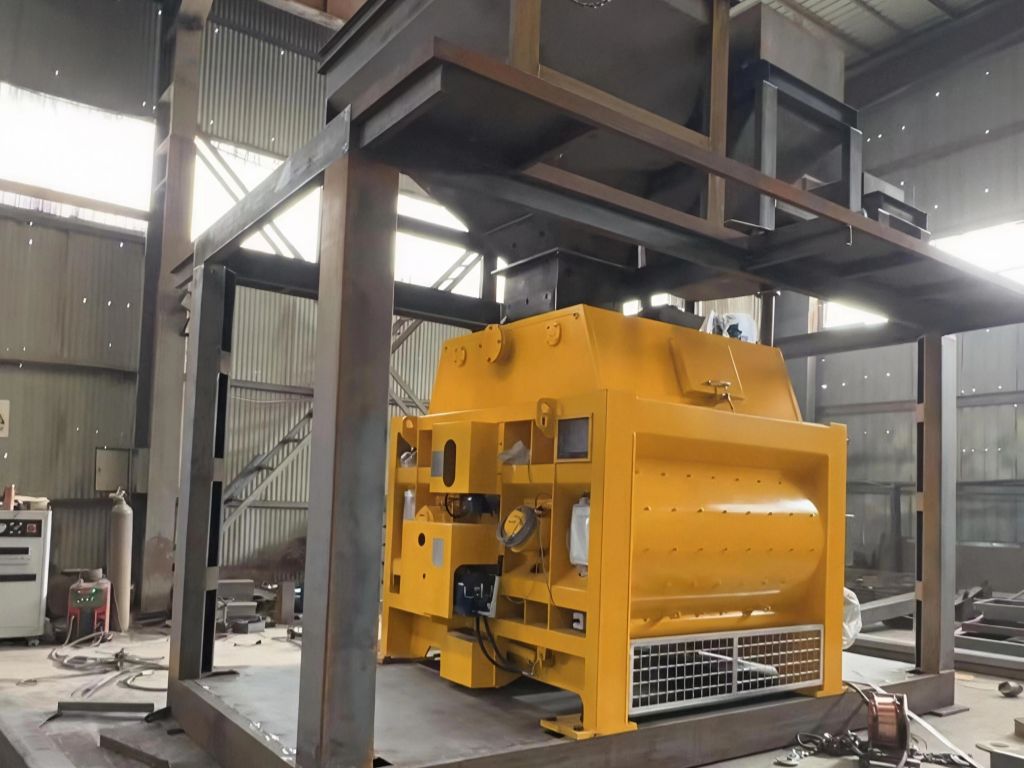
The HZS60 concrete batching plant is a compact, medium-sized station built around a JS1000 forced mixer with a 1,000-litre pan. Its theoretical output is 60 m³/h, calculated on a 60-second mixing cycle at full load. Everything else in the plant — the PLD1600 batcher, the aggregate bins, the screw conveyors — is sized to keep that mixer fed, so weighing never becomes the bottleneck.
Core Specifications Table
| Parameter | Specification |
|---|---|
| Theoretical output | 60 m³/h |
| Actual output range | 40–50 m³/h |
| Mixing unit | JS1000 forced mixer, 1,000 L |
| Mixing cycle time | 60 seconds |
| Batching system | PLD1600 batcher, 1,600 L |
| Maximum aggregate size | 80 mm |
| Daily output (8–10 h/day) | 400–500 m³ |
| Annual output (300 days) | 120,000–150,000 m³ |
The table captures the HZS60 concrete batching capacity together with the components that make it possible. Three numbers deserve extra attention: the 1,000-litre mixer, the 60-second cycle, and the 80 mm maximum aggregate size. That last figure matters if your stone runs coarse — check your aggregate gradation before you commit to a plant.
Theoretical vs. Actual Output: Understanding the Gap
Nobody runs a batching plant in a laboratory, and that is precisely why the actual HZS60 concrete batching capacity lands between 40 and 50 m³/h. On a live site, the loader has to keep the bins topped up, the cement silo needs refilling, and the mixer cannot start its next cycle until the previous batch has been fully discharged. Work those realities into the math and real-world efficiency settles at roughly 70% to 80% of theoretical output — a figure reported consistently by our customers and by other equipment users.
None of this means the plant is underperforming. The same overheads apply to every batching station: time spent weighing, feeding, mixing, and discharging is time the mixer is not producing. Concrete mixing is inherently a batch process, and every batch carries fixed costs that no control system can remove entirely.
Why Output Varies: Key Contributing Factors
| Factor | How It Affects Output |
|---|---|
| Batching time | Weighing and adding each material eats into every cycle |
| Discharging time | Concrete must clear the mixer before the next batch begins |
| Admixtures & water metering | Accurate liquid metering takes time and protects mix quality |
| Equipment maintenance | Worn or neglected equipment cuts efficiency and causes downtime |
| Operator proficiency | Experienced operators sequence cycles better and cut idle time |
If you take one thing from this section, take this: schedule pours around the actual range, not the theoretical one. A site that assumes 60 m³/h will fall behind by lunchtime; one that assumes 45 m³/h usually finishes the day ahead of plan.
Field Report: HZS60 Actual Output on a Working Site
In a recent production audit we ran alongside an HZS60 at a precast yard in eastern China that pours about 280 m³ per working day. Across a full 8-hour shift the station averaged 46 m³/h — 77% of the 60 m³/h nameplate — with short peaks of 51 m³/h during continuous trucking windows. The gap came down to mix changeovers, truck turnaround and one 20-minute maintenance stop, all of it logged on the station’s own PLC counter rather than estimated from the nameplate. If your site moves 400 m³ a day, plan for a 9–10 hour working window on a single HZS60.
Daily and Annual Output Calculation
Once you accept the real HZS60 concrete batching capacity, planning becomes straightforward. Run the plant 8 to 10 hours a day and the arithmetic below holds up well in practice.
| Period | Basis | Output |
|---|---|---|
| Daily output | 8–10 operating hours per day | 400–500 m³ |
| Annual output | 300 working days per year | 120,000–150,000 m³ |
Four hundred to 500 cubic metres a day keeps a mid-sized site comfortably ahead of placement demand. Multiply that by 300 working days and you reach 120,000 to 150,000 m³ a year — enough to sustain a commercial ready-mix concrete business or a steady run of infrastructure contracts.
HZS60 in Context: Model-by-Model Output Comparison
To see where the HZS60 sits in the product family, here is how theoretical and actual output compare across our common models:
| Batch Plant Model | Theoretical Production (m³/h) | Actual Production Range (m³/h) |
|---|---|---|
| HZS50 | 50 | 30–40 |
| HZS60 | 60 | 40–50 |
| HZS75 | 75 | 50–60 |
| HZS90 | 90 | 60–70 |
| HZS120 | 120 | 80–90 |
Notice the pattern: across the whole HZS range, actual production settles at 60% to 80% of the theoretical rating. When you size a plant, work from the actual column — it is the number your site manager will recognise at the end of the month.
Key Factors Affecting Production Output
The mixer gets all the attention, but the HZS60 concrete batching capacity is really decided by three groups of factors working together — the equipment itself, the supply of materials, and the people running the plant.
| Category | Key Factors |
|---|---|
| Equipment configuration & quality | Mixer performance, metering system accuracy, advanced control system |
| Material supply & management | Aggregate silo capacity, powder storage & conveying |
| Operation & management level | Operator skills, maintenance, rational scheduling |
Equipment configuration and quality. The mixing unit sets the ceiling, but the metering system matters almost as much. High-precision load cells keep every batch accurate, so operators are not constantly stopping to correct weights, and a microcomputer control system turns the whole cycle into one smooth automatic sequence.
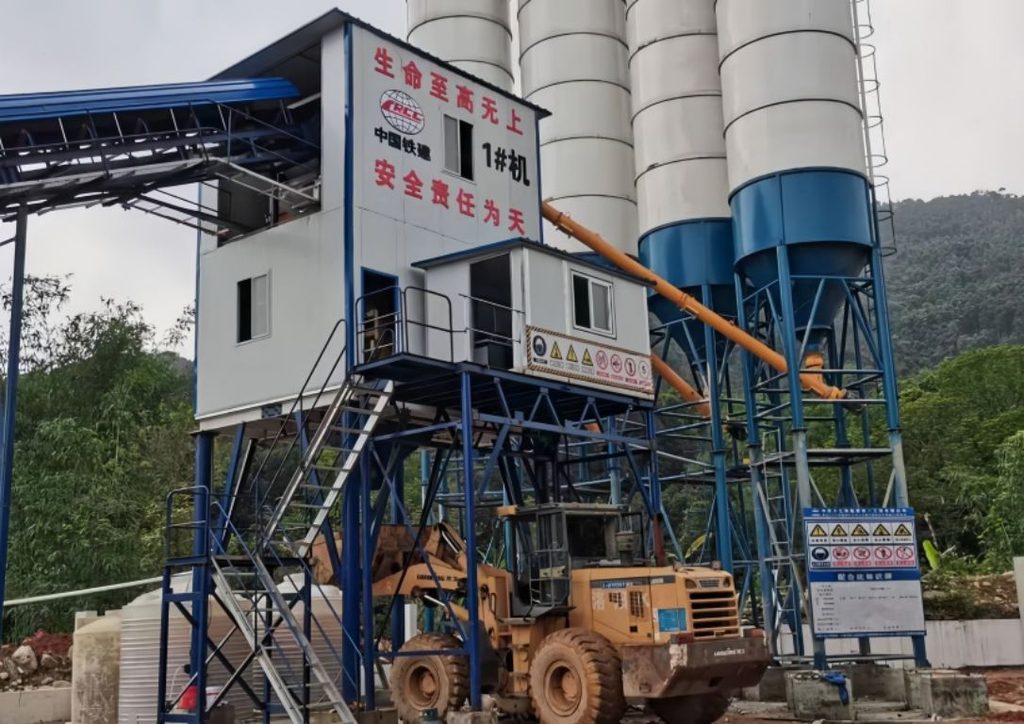
Material supply and management. A hungry plant is a slow plant. The standard HZS60 setup uses four 8 m³ aggregate silos and two 100-ton cement silos with screw conveyors — enough buffer that material delivery keeps pace with production instead of interrupting it.
Operation and management level. The best equipment still needs a skilled hand. Experienced operators sequence their cycles tightly and spot trouble early; regular maintenance keeps the plant healthy; and sensible scheduling — loads planned so trucks wait for concrete, not the other way round — removes the idle time nobody notices until the month-end figures arrive.
How to Maximize the Output of Your HZS60
Knowing the factors is one thing; acting on them is another. These are the measures we recommend to every customer who wants to push the real HZS60 concrete batching capacity closer to its theoretical maximum.
1. Optimize equipment configuration
- Buy the mixer and accessories from a maker you can hold accountable — component quality shows up in uptime, not in the brochure.
- Give the plant a powder storage system it can grow into: two or three 100-ton cement silos handle busy seasons without panic refills.
- Fit a wide enough conveyor, typically 800 mm, so aggregate flow never throttles the cycle.
2. Improve management
- Put operators through proper training — a trained hand runs a faster, cleaner cycle than any software workaround.
- Switch to preventive maintenance; scheduled inspections beat emergency repairs every time.
- Plan production so trucks, pumps, and mixers move to the same rhythm. The biggest output killer on any site is equipment standing idle.
3. Refine production processes
- Tune the mix design for the materials you actually have on site — a mix that suits your aggregates mixes faster and more consistently.
- Line up raw material supply in advance so a late sand delivery never stops the plant.
- Use high-performance admixtures to shorten mixing time and tighten quality.
Dual-Unit HZS60: Doubling the Capacity
When one line is not enough, two HZS60 units side by side deliver 120 m³/h of combined output, effectively doubling the HZS60 concrete batching capacity. We sell this configuration more often than people expect, and for good reason.
| Aspect | Dual-Unit HZS60 | Single HZS120 |
|---|---|---|
| Combined output | Up to 120 m³/h | 120 m³/h |
| Investment | More economical | Higher |
| Flexibility | Run one or both units to match demand | Single fixed capacity |
| Maintenance continuity | One unit keeps producing while the other is serviced | Full downtime during maintenance |
Compared with a single HZS120, the dual-HZS60 layout costs less to buy and is far more flexible: run both units for a big pour, or just one during quiet weeks. And when one plant is down for service, the other keeps delivering — something a single large station simply cannot offer.
HZS60 Investment Benefit Analysis
Output figures are only half the story — buyers want to know whether the machine pays for itself. Here is a realistic picture of what the HZS60 concrete batching capacity delivers on the balance sheet, based on the production numbers above:
| Item | Value |
|---|---|
| Annual output | 120,000–150,000 m³ |
| Reference sales volume | 60,000 m³ |
| Average selling price | $45.7 per m³ |
| Annual operating revenue | ≈ $2.74 million |
| Annual operating profit | ≈ $0.7 million |
Note: actual profit figures depend on region, raw material costs, management level, and market environment. These numbers assume 60,000 m³ of sales at an average of $45.7 per m³. If you are comparing models and configurations, our concrete batching plant price analysis breaks down how model and configuration choices move the investment.
As a medium-sized plant, the HZS60 earns its popularity by sitting in a sweet spot: modest enough in price to justify for a single project, capable enough to run a commercial ready-mix business year-round.
Conclusion: Is the HZS60 Right for You?
The HZS60 is not the biggest plant we make, and it is not the cheapest. What it offers is a proven balance: 40–50 m³/h of dependable real-world output, 400–500 m³ of daily production, and a return on investment that holds up in the spreadsheets. That combination suits most medium-sized engineering projects and ready-mix producers better than a larger machine they would run half-empty.
When you choose a plant, choose the configuration that matches your actual demand — not the theoretical rating. Factor in everything that affects output, from aggregate gradation to operator training, and the HZS60 concrete batching capacity will serve you well for years.
Want the full picture before you decide? Talk to our team — TX Mixing will tailor a solution to your site and support you through commissioning and beyond. And if you would like to know how we build first-class concrete equipment with advanced technology, that story is worth a read.
HZS60 Concrete Batching Capacity FAQ
About the Author
This guide was prepared by the batching plant engineering team at Tongxin Machinery (TXMixing), the manufacturer behind the HZS series from 25 to 240 m³/h. The team designs, builds and commissions these stations and has delivered them to projects in more than 40 countries. Figures in this article reflect engineering drawings, PLC logs and on-site commissioning records; contact us for site-specific data for your project.